


A Real Pain in the Bottom
/Vaginal delivery can displace your coccyx and cause incredible bottom pain. Read to see how physiotherapy can help.

One of my mother’s group friends, all credit to her, had only just had her baby when she and her husband drove to the beautiful Barossa Valley (known for some of the best red wine in the world) for a wedding. She had this awful pain in her bottom that was getting worse the longer they drove. She later had it investigated to find out that she had a displaced coccyx (tail bone). This is not uncommon with vaginal child birth and causes pain when sitting, pelvic floor dysfunction and is a general pain in the bottom.
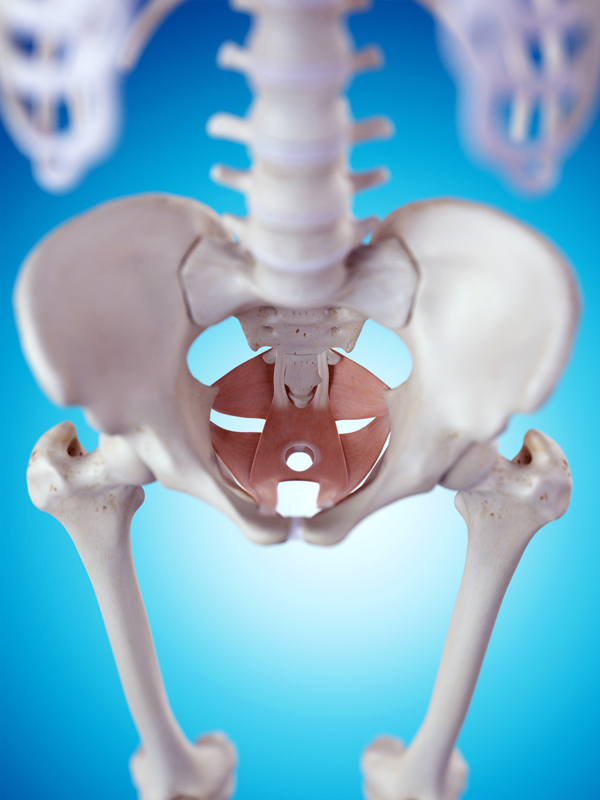
The pelvic floor muscles (see right) attach to the pubic symphysis (your pubic bone) at the front and run backwards and around the urethra (wee hole), vagina and anus (poo hole) and attach to the coccyx (tail bone) at the rear. See the blog on Pelvic floor strengthening and stretching- my story for more on the pelvic floor and how to strengthen or stretch it.
Due to sizeable baby having to squeeze out of the not that large pelvic cavity (which is bordered by the coccyx and other bones) the coccyx can be dislocated posteriorly (backwards) or laterally (to the sides). The other way the coccyx is dislocated is anteriorly which is unlikely with childbirth but common with higher impact falls on to the bottom.
“The dislocation causes pelvic floor muscle and ligament tightness to that they don’t work optimally...”
This dislocation causes pelvic floor muscle and ligament tightness so that they don’t function optimally but most importantly it hurts to sit. The muscle tightness can also cause bladder dysfunction, constipation and pain during intercourse.
Trained physiotherapist to the rescue. Through gentle home exercises, external mobilisation/ manipulation or internal if other measures do not work can release the pelvic floor or ligament tightness to realign the coccyx and remove the pain. You are in complete control of the treatment. We know how personal an area this is and if you feel uncomfortable with the suggested treatment we will not proceed. We require your consent to the treatment.
It is however a very helpful treatment to alleviate the pain, so highly recommended rather than after years of pain, that out of desperation for relief, some people have resorted to unnecessary surgery to remove the coccyx to alleviate the pain! Even if you try and put up with the pain for a long time these conservative measures will still work but just take longer to achieve. We often start with the least invasive treatment first and then progress only as necessary and as you consent.
“Gentle home exercises, external mobilisation/ manipulation or internal...”
The sooner you get it treated the easier it is to fix. You do not have to put up with pain. There is usually an explanation for pain so get someone to give you an answer. Our Women's Health physiotherapists are trained in these specialised techniques and give you the privacy and complete dignity you deserve in what may be (but should definitely not be) an embarrassing problem.
Summary
Vaginal delivery can cause coccyx displacement.
A dislocated coccyx can cause pain sitting but also cause bladder dysfunction, constipation and pain with sex.
Specially trained physiotherapists can treat the dislocated pelvis to remove this pain.

Melli Tilbrook is a Physiotherapist based at Adelaide Physiotherapy and Pilates Studio, Beulah Park.