


70-100% of pregnant or postnatal women have abdominal separation!
/Read how a physiotherapist can assess and treat prevalent abdominal separation and which exercises you should avoid.
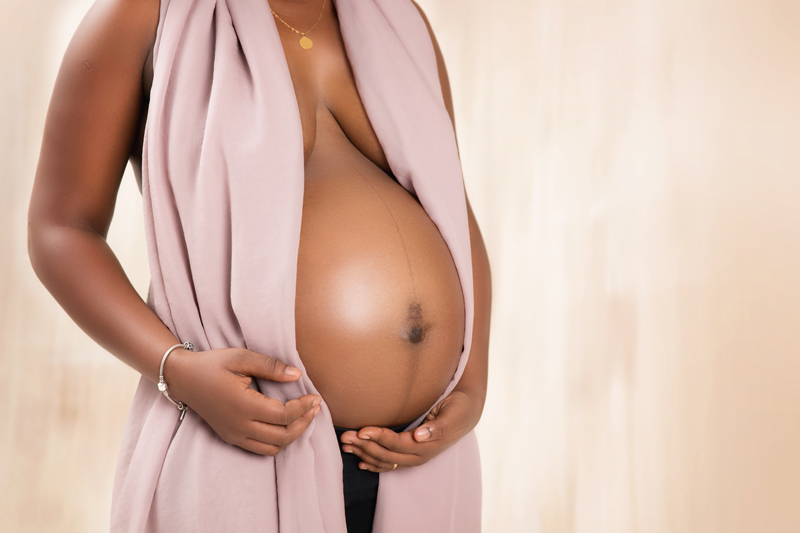
Separation of the abdominal muscles (diastasis of rectus abdominis muscle (DRAM)) is very common in pregnant and postnatal women: 70-100% (Boissonnalt & Blaschak (1988), Bursch (1987), Hannaford Tozer (1985)). This is due to the weakening of the linea alba (connective tissue joining the muscles especially the rectus abdominis). Pregnancy hormones, weakening abdominal muscles, weight gain and stretching of the abdomen due to the enlarging baby are the causes of the weakening linea alba.
The separation happens throughout pregnancy but largely in the last trimester and for weeks or months after birth. Because of its attachments to the core this weakening can cause back and pelvic pain due to lack of support. It can also cause pelvic floor weakness and incontinence due to the interaction of the core and pelvic floor, and abdominal hernias.
After pregnancy the width and angle of the fibres of the linea alba can change and this can reduce the ability of the abdomen to stabilise the lumbo-pelvic area. If the separation persists longer than four weeks postnatally the function of the abdominal muscles is likely to be affected.
It is important to have your abdominal separation tested as soon as possible (during pregnancy) but also in the first days after birth by a Physiotherapist as there is a narrow window to get the muscles to knit back together. If you have a significant separation we need to get a medically graded (only able to be prescribed by a medical specialist (including Physiotherapists)) compression garments fitted to you as this will hold the stomach tight so the muscles can harden in the shortened position (minimising the separation). It is important the garment is not too tight as this prevents the muscles from strengthening, leading to more weakness. It needs to be firm enough to support the back, pelvis and abdomen. The garment needs to be worn for 1-2 months post birth depending on the separation.

You also need to see a Physiotherapist to see when you are safe to return to certain exercises. Going back before your abdomen has re-joined leaves you at further risk of the above issues. If the separation is more than 2 fingers wide when doing a sit up, it is suggested that rectus abdominis and oblique exercises (like the ones listed below) should be avoided until the core and pelvic floor is strengthened. See my blogs on Switching on your core the proper way and Pelvic floor strengthening and stretching- my story for more information on this.
However a recent study by Mota, Pascoal, Carita and Bo (2015) actually showed crunches (rectus abdominis) exercises decreased rather than increased the abdominal separation and core exercises can cause a slight increase in the separation. This makes sense anatomically (I can explain if you wish) but the outcome of this study is that a Physiotherapist should independently feel your separation as you are doing crunches, core or the exercises below to see what separates or brings the linea alba together for you, and design an individualised program depending on your outcome.
“weakening can cause back and pelvic pain... pelvic floor weakness and incontinence... and abdominal hernias...”
Regardless of this study you need a strong core to support your back and pelvic pain but it may not be as relevant to the abdominal separation as we thought. More research is required. So in the mean time these exercises below should be avoided during pregnancy and postnatally until the separation has been assessed by your Physiotherapist whilst exercising, there is effective pelvic floor and transverse abdominis contractions during the exercises and there is no back or pelvic pain:

Sit ups
Oblique sit ups
Hundreds
Double leg lifts
Planks
Push ups
High impact exercise such as running and jumping
The physiotherapist's monitored and tailor made abdominal strengthening exercise program will make sure the separation gets better not worse and so that you can slowly 'regain your figure'. An additional note; the diaphragm thought just to be used with breathing is important to retrain as this is also a core stabiliser. The diaphragm is often inhibited in its action due to being pressed upwards with the growing baby.
In addition to a strengthening program and abdominal garment it is important to contract your core and pelvic floor when doing every day manual handling tasks to prevent pains, weaknesses and potentially the abdominal separations or hernias getting worse. For example, take care to activate these muscles when you are lifting your baby or the pram in and out of the car. See my blogs on Lifting your baby and Prams.
“important to switch on your core and pelvic floor when doing every day tasks to prevent the separation getting worse...”
So to avoid back and pelvic pain, incontinence and abdominal hernias give us a call to assess your abdominal separation and to get a tailor made strengthening program made just for you to address this.
Summary
Abdominal separation is very common in pregnant and postpartum women (70-100%).
Doing sit ups etc may make the separation worse and should be avoided until your physiotherapist has assessed you.
Abdominal separation can be measured and managed by your physiotherapist.

Melli Tilbrook is a Physiotherapist based at Adelaide Physiotherapy and Pilates Studio, Beulah Park.