


Developmental dysplasia of the hip (DDH)
/Read to check your baby does not have the symptoms of developmental hip dysplasia which is quite common and easily treated
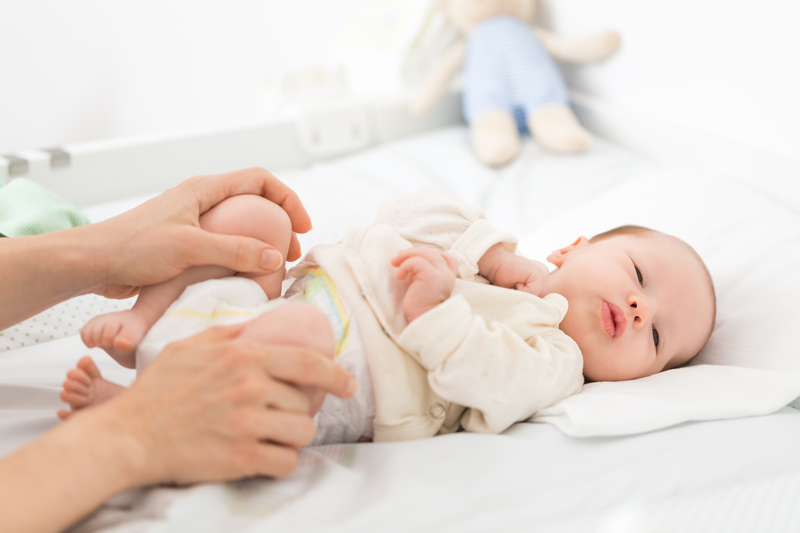
Today we went to see Misaki’s orthopaedic surgeon. It was the nine month check for her hip dysplasia and everything is looking perfect. She had to have her first xray today which is really low grade but not something you want to expose your baby to often.
It was really interesting for me to see the x-ray because I learnt that a baby’s hip bones look really different to an adult’s. The head (ball) of the femur (thigh bone) is actually cartilage with a tiny dot of the beginnings of bone in the centre. The circle of bone then grows bigger and bigger and eventually joins to the growth plate in the neck of the femur which does not become solidified until they are about 15 years old. I also noted that the femur was quite thin proportionally to an adult’s with considerably more fat surrounding it (well in Misaki’s case she is definitely padding those bones well). Her pelvis was also not wide like an adult females or even a male’s width.
“1 in 600 girls but only 1 in 3000 boys...”
Anyway, probably a paragraph just for my interest which maybe I should delete. I wanted to write this blog on hip dyplasia to highlight that it is one of the most common musculoskeletal issues in a new born, 1 in 600 in girls but only 1 in 3000 boys (https://www.betterhealth.vic.gov.au/health/conditionsandtreatments/developmental-dysplasia-of-the-hip-ddh).
The paediatrician checks a baby’s hips when they are first born to see that they don’t dislocate and have enough range of motion (restriction can be a sign of DDH). Misaki’s was noted on her discharge check, on day 5. As a physiotherapist I was aware of how common it is and what they do to treat it but it was still a bit of a shock. My perfect baby has dislocating hips.
Hip dysplasia is caused because the cup of the hip (acetabulum) is too shallow to securely fit the cartilage head of the femur. Both the acetabulum and head of femur are what make the hip joint.
Apart from being female, multiple or breech births, congenital conditions such as cerebral palsy, first time mothers (my issue) increase the chance of DDH.
DDH can develop after birth due to incorrect wrapping. It is really important to not wrap up their legs tightly. Wrap them so they are free to move their legs.
“the cup of the hip is too shallow to securely fit the head of femur...”
The day after we were discharged from hospital we had an appointment with the orthopaedic surgeon for his opinion. Lovely guy. As expected for me, he confirmed the hip dysplasia and then we were referred and had an appointment the same day with a paediatric physiotherapist for treatment.
Paediatric physiotherapists are trained to tailor fit hip splints in our case the Dennis Browne Hip Splint. The other option they might use is a Pavlik harness which has shoulder straps. The splint stays continuously on the baby for 6- 12 weeks depending on the severity and age it was diagnosed (6 weeks in our case due to early diagnosis). They check periodically with an ultrasound to check that the acetabulum is taking a good deep cup shape surrounding the head of the femur. Because the acetabulum is cartilage at this age, this makes it easier to manipulate in to shape with the splint. It also allows the hip to be seen with ultrasound not x- ray which is safer for the baby too.

The brace created a few challenges but nothing unsurpassable. It was a shame that for 6 weeks she was unable to have a bath because she loved the water from the start. Incidentally that six week break did not make her scared of baths or the pool. There is a special procedure to change her nappy which forced her to do tummy time each nappy change- a bonus that often makes babies with DDH stronger at tummy time due to the frequency of tummy time. Some people find changing their nappy quite hard work but I didn’t know any better and actually found it to be easier when comparing it to the normal way later because she couldn’t wriggle her legs around or get out of position.
Besides the medical costs, there were added costs of having to go and buy a car seat after just having hired a baby capsule she could no longer fit in to. But hey, I really am not complaining. It is for such a short period of her life. She was in absolutely no pain, was not bothered by the splint at all and the treatment method has been around for decades with excellent medically proven long term results. We were blessed to have an Associate Professor as our surgeon and knowing my profession was happy to share the evidence from the research he has conducted over the years. It is all extremely promising.
So if your baby is diagnosed with hip dysplasia please feel very confident of easy correction with the splint and low risk of long term side effects like Perthes disease or hip arthritis etc. There is a small risk of avascular necrosis (lack of blood supply to the head of the femur so it doesn’t grow properly) so it is important to go to the reviews to get another xray check. We will see him in 12 months.
If the DDH is picked up later they may need surgery and hip casts worn for a considerably longer time. The surgery can be just to relocate the dislocated hip or be more involved. This is more distressing for the parents and if picked up when they are walking could have caused some nerve damage. As always, early detection is best.
Hopefully your doctor picks it up but if you hear your baby’s hip clicking, the bottom creases look asymmetrical or notice they have restricted range of hip motion go and see your doctor as soon as you can. They are not going to tell you with tears because it is not painful.
Summary
DDH is quite common with female babies, first time mother's, multiple or breech births or with congenital conditions such as cerebral palsy.
Treatment with a brace has been used for decades and has excellent short and long term results.
If your baby's hips click, the bottom creases look asymmetrical or they have stiff hips see your doctor.

Melli Tilbrook is a Physiotherapist based at Adelaide Physiotherapy and Pilates Studio, Beulah Park.