


Baby Carriers
/Considerations from a physiotherapist's point of view when purchasing a baby carrier.
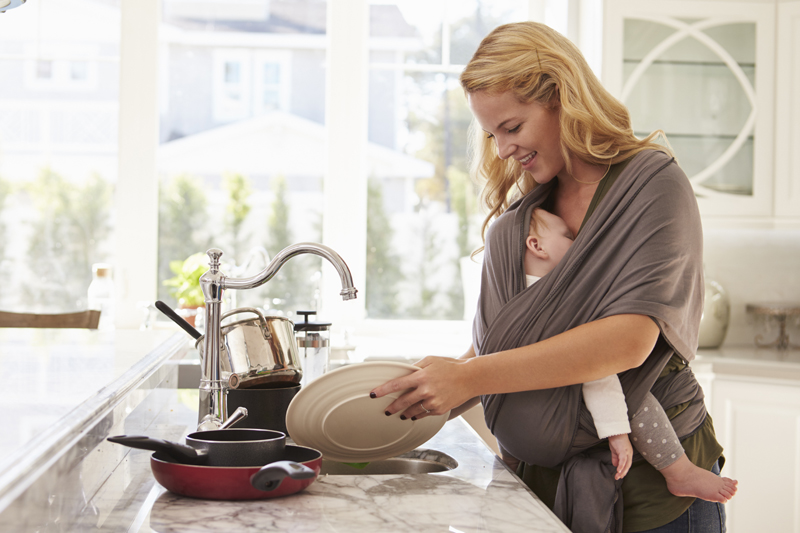
Travel has been something I have been fortunate enough to do during my maternity leave. We have been following my husband for work seeing parts of Asia and America along the way. We have had some wonderful times and I feel blessed. It has put us behind my mother’s group babies a bit though with self settling and solids as it is hard to be diligent with a routine in airports/planes and hotels. I wouldn’t swap my life for anything and Misaki is a trooper for being flexible and relearning self settling and our lives are all the richer for it.
The amount of luggage you bring for 1 baby is astronomical! The pram, bassinet, nappy bag, luggage with 2 sets of clothes/ day… I should write an article on lifting luggage but again it is the same, core on, straight back, bend your knees, face the object and be as close to it as possible and then lift. Be careful lifting off the carousel because you don’t want to twist as the bag is moving. I was lucky to have my handsome strong husband lift all the luggage at every corner as I held Misaki in the carrier. I love you Jaimie! The airport trolley to carry the bags goes without saying. Like a shopping trolley make sure you have your core on pushing the trolley because as it deviates left and right or you need to turn, turn the trolley with your legs with lateral lunging movements.
Baby carriers were excellent for us in the airports but I wouldn’t recommend walking around with them for long periods. Studies show that the longer you carry a weight the worse it is for your back (Haselgrove et al, 2008). It is not so much how much they weigh but for how long you carry them.

Prams
I recommend well adjusted prams for longer periods of carrying. That being said if you have a pram that is not good over rough terrain/ scaling stairs etc you could put more force on your back than carrying a baby close to your body in the carrier. Judge this by the environment/ situation you are under. See our blog on Prams for more guidance on purchasing a pram from a physiotherapist's perspective.
“The longer you carry a weight the worse it is for your back...”
Wraps
There are so many carriers on the market. I have a gorgeous friend who has a carrier fetish and had bought nearly all the carriers on the market so naturally I went to her for advice on carriers. I ended up buying this beautifully cross woven cotton wrap that needed an babygami degree to assemble. Although I am a physiotherapist, vanity and aesthetics often tends to prevail leading me to this initial decision. I will not name brands (unless anyone wants to sponsor me ridiculous amounts to pimp their carrier ;)) but I have hardly used this beautiful wrap because it is so hard to assemble.
Wraps are very popular in Australia though so please use them if it works for you. If you do want to persist they are wonderful for newborn bubs especially, as they can be held very close to you during the day, enabling that heart melting bonding.
Your baby being wrapped to your body is great ergonomically. The babies tend to grow as your strength grows so a little newborn with a weak postnatal body is not that demanding. The newborn baby needs to be held on your front not the back to protect their back and so that you can see and kiss them easily so that you can monitor their breathing.
Later they can be carried on your back- with a high back position if they can sit assisted (about 4 months) or lower when they can sit unassisted (usually about 6 months). It is quite challenging to get a baby on to your back so practice a lot at home with the baby resting on the carrier on the bed with someone to spot you before doing it alone away from the house. Also be careful when sitting on the bed and twisting to put the baby and sling on your back- this can potentially cause back injury being flexed and rotating.
There are many ways to carry your baby which you learn in your babygami degree which from a physiotherapist perspective I am generally all approving of. The only one I don’t approve of is the hip carrying one as it is an asymmetrical hold leading to a twisted posture and potential pain and pathology. Read about this same principle in the blog on Carrying your baby Beyoncé style or not?
“I don’t approve of the hip carrying (position) as it is an asymmetrical hold leading to a twisted posture...”
Ring slings
There are apparently ring slings used traditionally in Mexico with rings to quickly tighten the wrap around the baby. I haven’t seen these on the market but from doing some research appear to be a safety risk as the rings can loosen and the baby could fall out! Perhaps leave this one!
Pouch slings
There are also apparently pouch slings which go over one shoulder and around the baby. These are not adjustable however so would only fit one person. Although it would fit snuggly I don’t like this option as it is asymmetrical.
Mei Tais
Mei Tais are used traditionally by the Chinese and look similar to the buckle carriers but instead of the buckle are tied so more easily adaptable to different carriers (people). Again I have not seen these on the Australian markets but have the positive of the baby being held symmetrically but perhaps not as close to the body as a buckle carrier.
I have seen several parents using slings but they tend to use them unilaterally which I wouldn’t recommend as this causes you to move your hips towards the direction of the baby to support their weight. This causes lateral curvature of your spine which can lead to hip and back problems.
Buckle carriers
Lastly soft structured/ buckle carriers are very common in Australia and what we have tended to gravitate towards as a family. This is because they are so much easier to put on than the wrap. Again I can’t name brands but will recommend features to look for. Get one with a wide hip and shoulder bands to distribute the weight better. Make sure you adjust the straps so that the baby is sitting close to your body and symmetrically. If you think you will want to do a lot of baby wearing consider getting one that you can carry them on your back as well as your front. Do not carry your baby on your back until they can sit unassisted with good head and back control (usually about 6 months).
“there are good and very bad (well known and popular) brands out there in terms of ergonomics...”
Brand awareness
We went recently to try and get a similar soft structured carrier but one that could be outward facing and OMG that was an education to me that there are good and very bad (well known and popular) brands out there in terms of ergonomics. I wish I could tell you what not to buy and what to buy but I can’t in this public forum. But anyway one brand made my back hurt immediately and also on the drive home, the straps felt like they were in the wrong place so Misaki was too high pulling me forward so I felt unbalanced. No adjustment helped. The other felt beautiful, Misaki felt so much lighter and I felt much more comfortable and balanced. It was hard to say apart from the wider straps what made such a dramatic difference but it did. If you have good enough body awareness you might be able to tell when you try them on at the shop. My husband wasn’t able to so may be my knowledge helped but it is a big strain on my back so really important to get right.
Postural corrections to avoid pain and injury
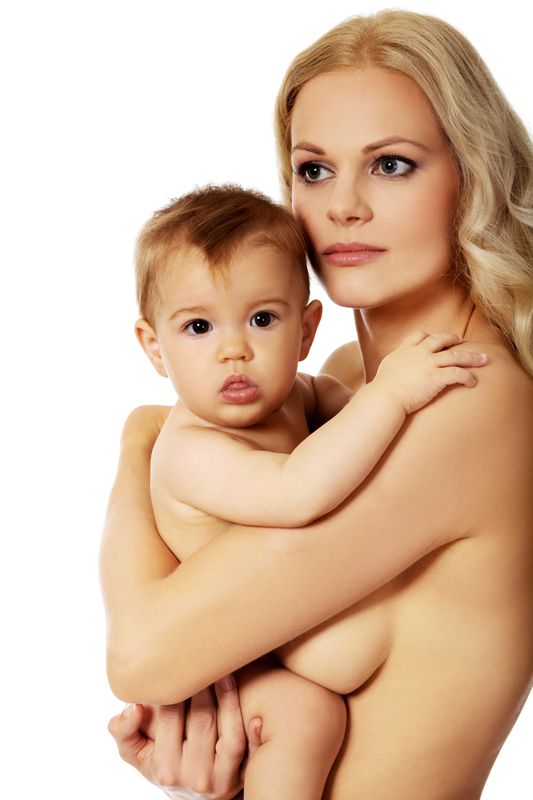
With all carriers you also need to pay particular attention to your posture. With extra weight on your front or back (and hopefully not one hip) you need even stronger core muscles to hold the same good posture. With the weight in front of you, you will tend to lean backwards which will tighten your back muscles and put increased load on your facet joints, both which can lead to back pain.
If your baby is being carried on your back you will tend to lean forward and to hold your balance you will tighten those same erector spinae back muscles leading to muscle tightness and potential pain. To avoid these issues we need to instead hold a good neck, shoulder, upper and lower back and pelvic posture (!) to avoid musculoskeletal problems.
This is often hard to judge yourself and may need the assistance of a physiotherapist to educate you and give you exercises to strengthen your posture. Pregnancy tends to already lead to these postural imbalances from carrying that extra weight around your middle for 9 months. You probably need an initial massage and mobilise to reset your body to then be able to hold the correct posture.
So the take home message with carriers is to make sure you are holding your baby symmetrically in whatever carrier you choose, make sure the carrier is well adjusted to you so that your baby is being carried as close to your body as possible, minimise the time that you are carrying your baby and lastly hold a good posture.
Summary
The longer you carry your baby the more strain it puts on your back.
Make sure your baby is held as close to your body and as symmetrically as possible to minimise the strain on your back.
Be conscious of holding a good upright posture when carrying your baby.
Different brands of the same carrier can be vastly different in their ergonomics and therefore comfort so try them out first and get them fitted to your body.
Reference
Perceived school bag load, duration of carriage, and method of transport to school are associated with spinal pain in adolescents: an observational study. Clare Haselgrove, Leon Straker, Anne Smith, Peter O’Sullivan, Mark Perry, Nick Sloan 2011 Australian Journal of Physiotherapy Volume 54, Issue 3, 2008, Pages 193–200

Melli Tilbrook is a Physiotherapist based at Adelaide Physiotherapy and Pilates Studio, Beulah Park.