

How to avoid knee pain when lifting your baby
/Read this blog to work how to avoid or alleviate knee pain caused by all the squatting and lifting we do as Mummies.
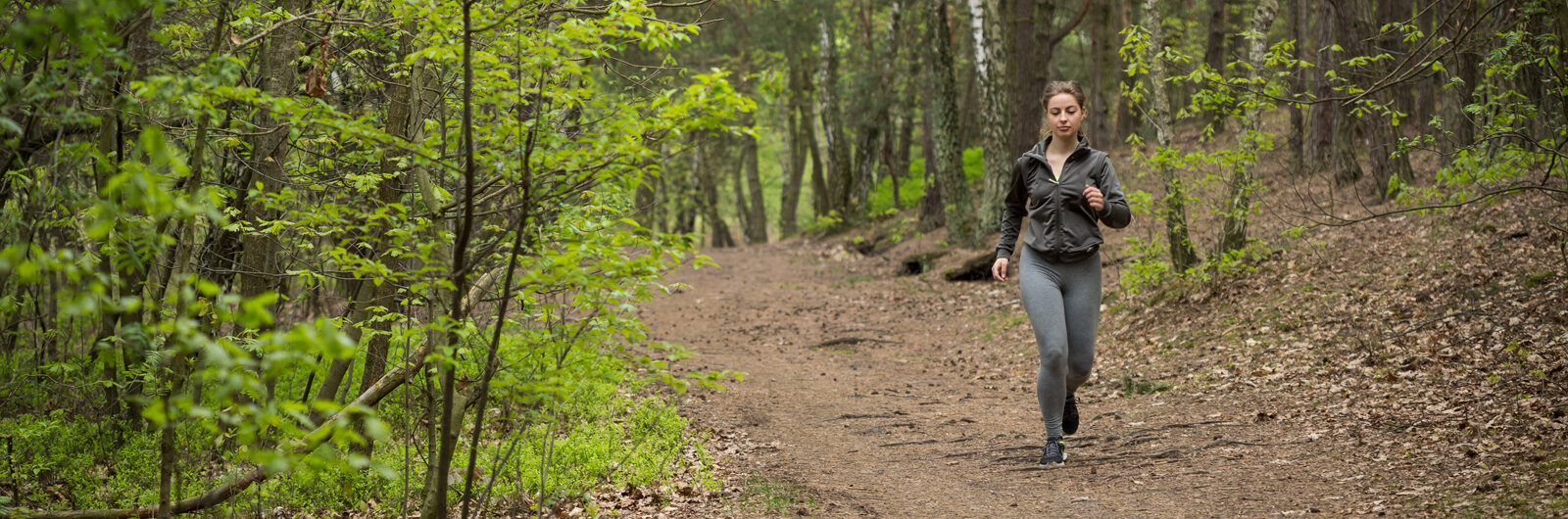
Does parenting hurt every part of your body?! As a 40 year old Mum who is more unfit than ever my knee pain has started to return. I keep questioning my age as a contributor but I think it is much more due to my strength and fitness levels. When ever I do lots of regular hill walking or in my very distant past as a rower I am fit, strong and I have no knee pain. Take away my leg and butt strength and the pain returns. So simple!
“I keep questioning my age as a contributor but I think it is much more due to my strength and fitness levels.”
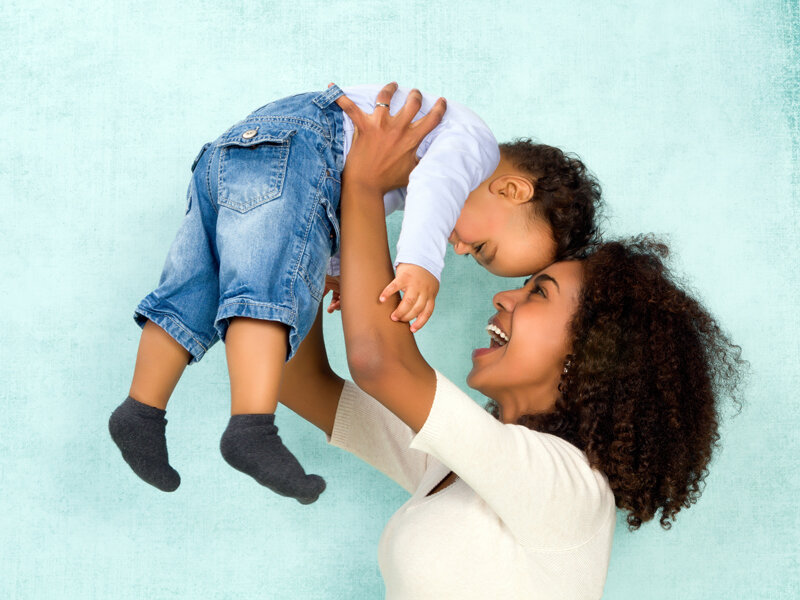
In my defence and to all the other mothers and fathers that hear me, we are probably squatting much more than we did in our previous lives as free agents. We are squatting to pick up babies from the floor, chairs, cars, lifting prams out of the car and picking up the countless toys! Read this blog on how to lift our babies and exercise without getting knee pain.
“we are probably squatting much more than we did in our previous lives as free agents.”
Squatting and lifting
I remember a celebrity with a great body once saying she would just do heaps of squats around the house (plus Pilates, personal trainers and rabbit food probably) but I have always remembered that. This exercise philosophy is perfect for us time poor, home restricted Mummies! So I am squatting in the shower/ when preparing dinner/ picking up toys to get some strength exercise in. This was hurting the other day so I knew I needed to check in my form and up my strength.
As a physio, you hand out all this advice but sometimes… often, you don’t apply it to yourself. You may have heard this advice below before, but I could totally feel the difference to my knee pain, immediately AS I applied it.
When squatting, you should squat like you are trying to sit on a chair behind you. This will transfer your weight over your heels, thus taking the weight off your knees and knee caps.
“you should squat like you are trying to sit on a chair behind you.”
In addition to this, and this is the bit that really helped me, REALLY concentrate on clenching your butt (gluteus maximus) muscles on the way down and on the way up. Thinking about your butt doing the work, reduces you using your quadricep (front thigh) muscles too much. When there is too much tightening of the quads, there is too much compression of the patella (knee caps), which can cause pain and crepitis (grating sound/ feeling) and potentially degradation and arthritis in the long term. Tone in the gluteus maximus gives you a free butt lift and “longer legs” too!
“REALLY concentrate on clenching your butt (gluteus maximus) muscles on the way down and on the way up.”
When squatting, also think about pushing your knees apart in line with your feet so that they don’t collapse inwards as you squat down and up. This uses other butt muscles (gluteus medius and minimus). Keeping your knees in line with your feet helps the knee caps and knee joint track properly, again minimising the pain and degradation described above. It also tones the love handles beautifully!
“think about pushing your knees apart in line with your feet so that they don’t collapse inwards as you squat.”
Exercise guidelines for Mummies
“30 minutes moderately intense daily exercise is all that we need (150 minutes/ week).”
Over the winter, the cold and rain deterred me from walking up our nearby hill for exercise. So instead I looked up an online aerobics workout. Currently many exercise guidelines say that 30 minutes moderately intense daily exercise is all that we need (150 minutes/ week). This research has been done to prove that even when life today is so busy, we can still achieve sufficient fitness and health. The idea and consequential research is brilliant.
In addition to the strength and toning benefits, 30 minutes of exercise each day has been shown to reduce stress (Wipfli et al, 2013), an all too common symptom for us Mummies! It also helps prevent age related diseases such as cardiovascular disease, Alzheimer’s, diabetes and Parkinson’s disease by reducing inflammation (Harvard health letter, 2013).
So in the comfort of my own home, I have been attempting Bollywood and modern dance moves and having a great time. I am sure I look as cool and sexy as the sexy young things on my screen but what do I care? I am having a ball and so excited that I am breathing hard, all inside 30 minutes. The beauty of this is that you don’t need a babysitter/ to get out of the house, to make it happen.
“30 minutes of exercise each day has been shown to reduce stress and prevent age related diseases such as cardiovascular disease, Alzheimer’s, diabetes and Parkinson’s disease.”
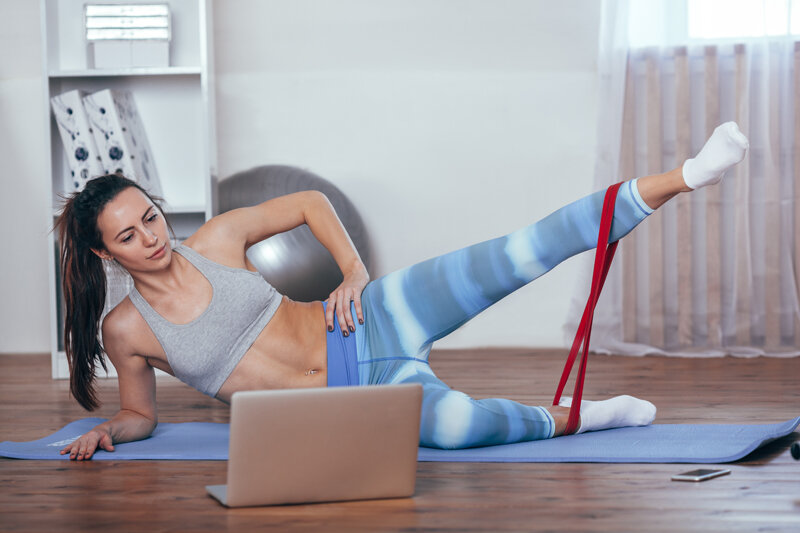
Now for us busy Mummies I think this CAN be a great option. HOWEVER, I would not recommend high impact exercise or changing directions fast if you have had your baby recently. Your ligaments are loose from the relaxin hormones and take at least 6 weeks to gel again. Doing slow, low impact exercise is best for the first six weeks at least (if you are even up to it)! Even then, if you have an unstable pelvis don’t do low squats either because even that can cause pelvic instability.
When I was doing my fast, high impact squat jumps etc ( 3 years post birth), I felt it in my knees and had to resort to the low impact option which is totally what you should do if feeling any discomfort. When strengthening the knee or any body part you should start with slow, low impact, one directional repetitions and then build speed, direction and impact (resistance).
Glute and knee strengthening exercises
If you are feeling knee pain you can try these exercises to strengthen your glute and leg muscles:
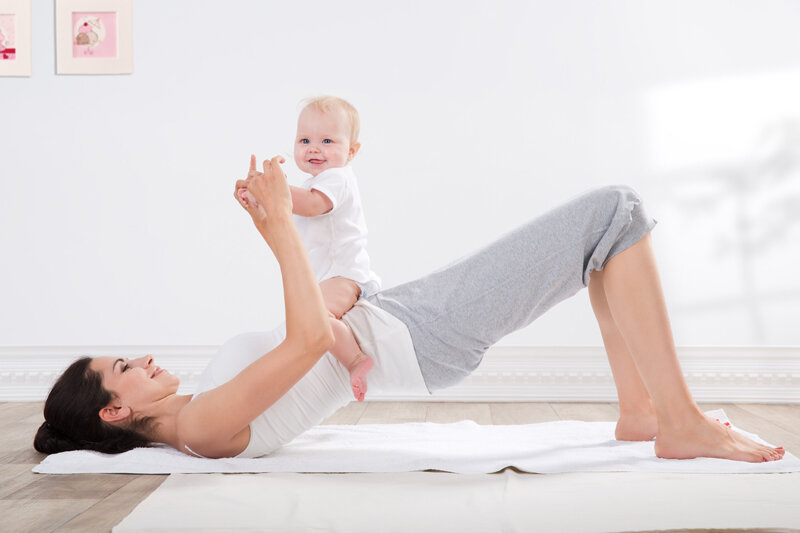
1. Bridge. Lie on your back with your knees bent and using your glutes lift up your bottom,
2. Side step. Step off a step sideways being careful to not let your loadbearing knee collapse in and,
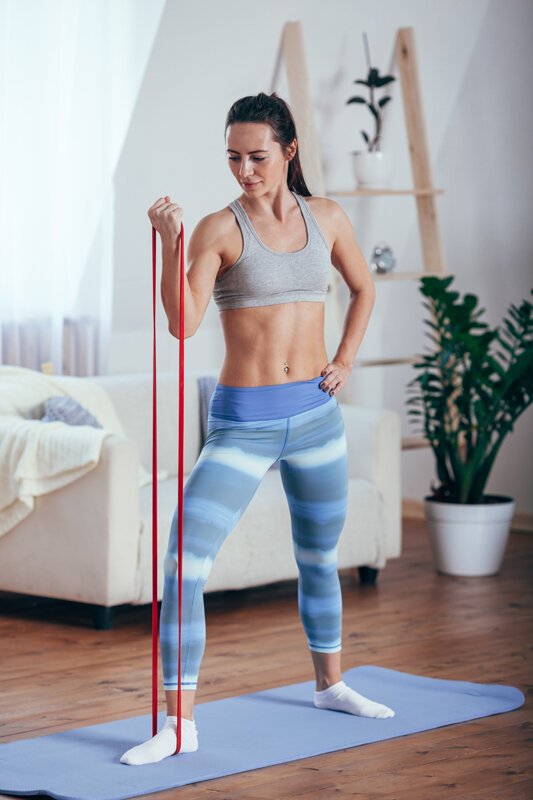
3. Leg abduction walking. Walk sideways with a resistance band around your thighs.
However, it is absolutely the best idea to see your physiotherapist to assess your body and to advise on an appropriate exercise program for you to regain your strength to be able to look after yourself and your baby.
The sun has now returned and it is two months before I am off to India, Nepal and Bhutan, so I am back to the Adelaide hill climbs again which gives me such pleasure, such stress relief and a great leg, butt and aerobic workout. Bliss. Enjoy spring everyone!
Summary
Parenting often causes us to squat a lot more than we are used to so our knees are vulnerable to pain and injury.
Rather than having a mental breakdown over picking up the toys AGAIN, deep breath and use it as an opportunity for strengthening by imagining you are sitting down on a chair and keeping your knees apart.
30 minutes of moderate exercise 5 times a week is all that is needed for stress relief, fitness, strength and preventing age related diseases.
When strengthening your legs or any other body part start with low impact, unidirectional, slow exercise before building up impact, speed and change of direction.
References
Wipfli, Brad and Ramirez, Ernesto (2013) “Stress Reactivity in Humans and Animals: Two Meta-Analyses,” International Journal of Exercise Science: Vol. 6: Iss. 2, Article 7.
Available at: https://digitalcommons.wku.edu/ijes/vol6/iss2/7‘Best medicine: The science of exercise shows benefits beyond weight loss’, (2013) Harvard Heart Letter, Harvard Health Publications, 23(11), 6-6

Melli Tilbrook is a Physiotherapist based at Adelaide Physiotherapy and Pilates Studio, Beulah Park