

Trampolining - the good, the bad and the ugly
/Trampolines are a wonderful activity to help us all survive being restricted to our homes during this Corona virus epidemic. Read about the many health benefits, but also the risk of injuries, and the potential for stress incontinence!
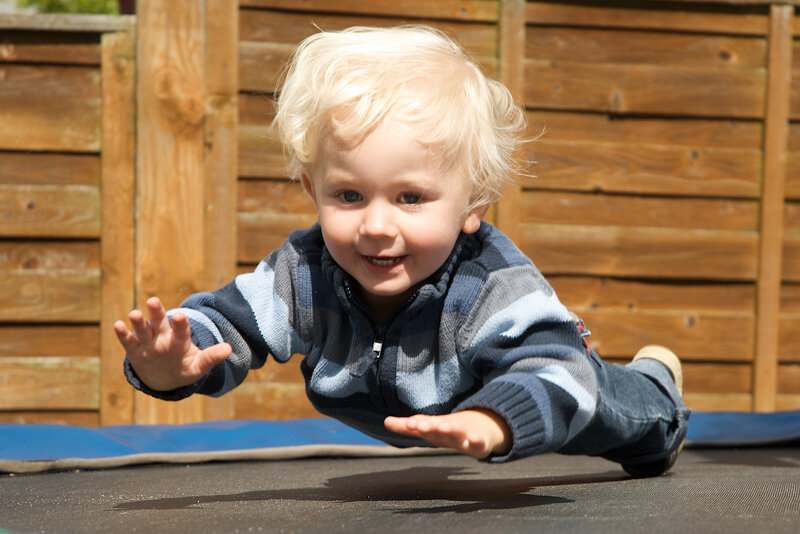
I have read this book recently, “The land before avocado” (1) which compares Australia in the 1960/ 70s to now. It reminded me that the food was very limited and bland compared to now. Some may be old enough to remember that even our Mum’s attempt at exotic cuisine didn’t reach further than Australasian “Chinese” honey chicken. Coffee, if available at all, was only instant. In addition to this, interesting statistics were provided to prove that as well as crime rates being higher back in the 1970s compared to now, (contrary to what the media would have you believe), so were the dangers of children seriously hurting themselves. Parents just let their children disappear to entertain themselves for the day. Some argue that the helicopter parenting today will create children who will not have the courage or skills to be independent, but research proves at least they will be alive to try! (1)
“..as well as crime rates being higher back in the 1970s compared to now.. so were the dangers of children seriously hurting themselves.”
Trampoline injuries
I think most people have fond memories of spending much of their childhoods jumping on a trampoline. Trampolines in my day were rectangular, had exposed springs, no wall netting and definitely no roof for sun protection! The trampolines of today provide all the safety measures that prevent the prevalence of the major injuries of yesteryear. Trampoline injuries were much more serious; children fell off the trampoline breaking bones or causing head or spinal cord injuries, or got stuck and twisted in the exposed springs.
“trampolines are still the single biggest cause of children presenting to the Accident and Emergency department..”
However, even with all these safety measures, trampolines are still the single biggest cause of children presenting to the Accident and Emergency department at the Princess Margaret Hospital in Western Australia in 2015-2016 (2). My sister in law works at the Royal Adelaide Hospital in South Australia and says the statistics are similar. The more serious injuries of the 1970s are less common but still happen.
Research in Australia (3) has shown that the main risk factors for injuries on trampolines these days are:
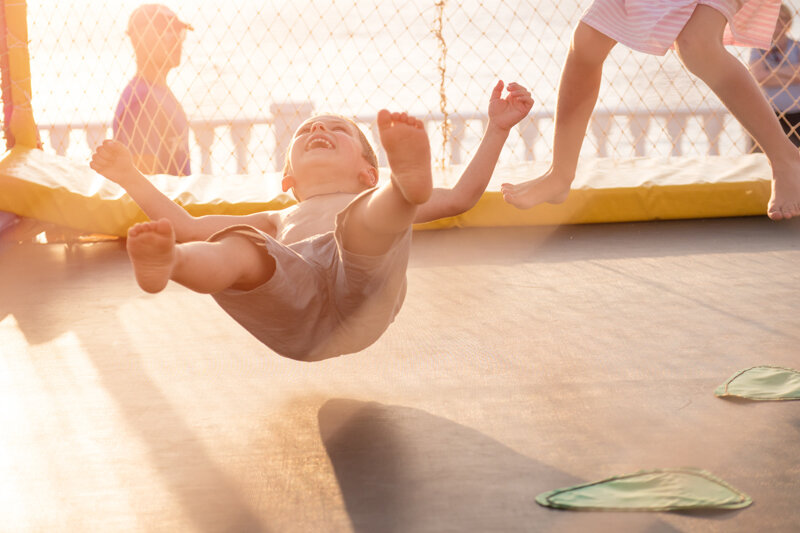
Lack of adult supervision. There is a reduction in injuries caused by falling off trampolines but there is an increase in injures from doing tricks, slipping on balls and wet trampolines or colliding with other jumpers (3). Adult supervision could prevent these activities.
More than one child on the trampoline at a time. More that 71% Australians said that they allow multiple children on the trampoline at a time (3). This allows for increased collisions of bodies and potential head injuries. We knew about the one child policy so are strict on that but don’t know anyone else that enforces that rule. You can use your judgement now that you know the risks.
Children under 6 using a trampoline. The biggest number of presentations to A&E for trampoline accidents were 0-4 year olds (45.6%)! It is argued that they are not developmentally ready to jump on a trampoline (3). This is an alarming fact!
“More that 71% Australians said that they allow multiple children on the trampoline at a time.”
The benefits
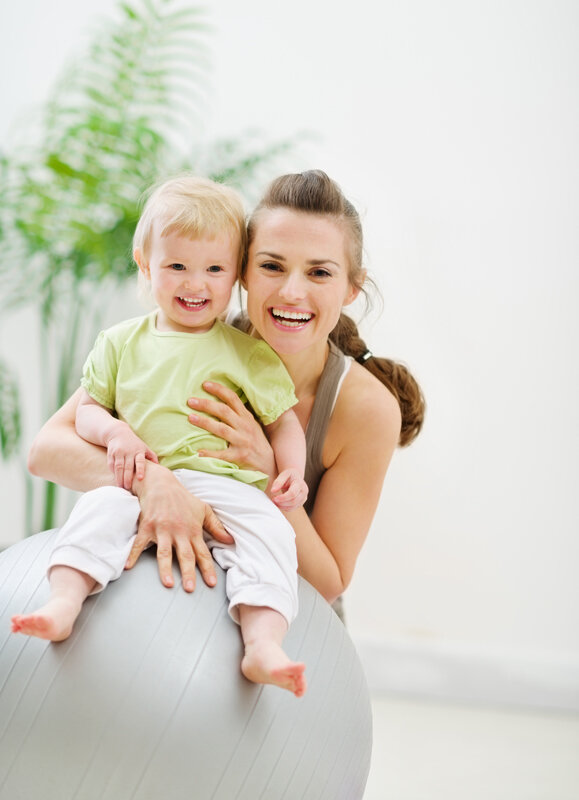
Contrary to the safety recommendations above, paediatric physiotherapists have found great benefits in balance and proprioceptive skills as well as leg and postural strength from using a trampoline at a young age (4). I guess the difference is knowledge of what they are, and are not capable of. If the child is challenging their balance on the trampoline with age appropriate skills such as sitting and walking, with a parent in control of the situation and with no other children/ obstacles, this would be safe. Read my blog on Gymbaroo/ Kindergym: I am an unco, will Misaki be one too? for ways to increase your child’s coordination etc. Alternatively, try challenging your child’s balance on a gym ball like in this picture on the left.
“paediatric physiotherapists have found great benefits in balance and proprioceptive skills as well as leg and postural strength from using a trampoline at a young age.”
In our forced Covid19 virus isolation, jumping on the trampoline has formed part of our daily routine. It has been an incredible stress release and decent workout for both mother and daughter.
We have both been able to gain skills in:

Memory. Challenging each other to remember then jump on a sequence of different pictures that are printed on the trampoline is excellent for the memory. I have particularly enjoyed this mental challenge whilst not working.
Coordination, agility and balance. Being sedentary in isolation can make quick reductions to these, so use trampolining to combat it.
Core/ abdominal strength. With your balance challenged you should automatically use your core. However if you jump your knees to your chest, this is like an abdominal crunch, so satisfying! A good core is crucial for good posture. Firing the core up intermittently will encourage a good posture for the likely increased Covid19 isolation screen time!
Leg strength. Quads, glutes and calves get a good toning when jumping and if you try to touch your bottom with your feet you will work your hamstrings too.
Aerobic. Running and jumping will help increase oxygen to your brain to re-energise you, in the dare I say, boredom of being stuck at home! The deep breaths help release the tension for parent and child as well as burn some of the excess parental wine and chocolate calories! Increasing cardiac fitness to your lungs and heart may potentially reduce the severity of the covid19 virus if you happen to get it too.
“jumping will help increase oxygen to your brain to re-energise you, in the, dare I say, boredom of being stuck at home!”
Trampolines and stress incontinence
Lastly the ugly. After having a baby vaginally, your pelvic floor muscles and collagen support structures (fascia) have been stretched and often torn. This commonly causes stress incontinence- loss of urine when coughing, sneezing, running and .. jumping. I had a caesarean birth so have not ever suffered stress incontinence, until now! When jumping on the trampoline I could sense a slight loss of urinary control. The downward pressure on my pelvic collagen structures was not being adequately supported by my automatic upward pelvic floor muscle activation. This presented me with an opportunity to actively contract my pelvic floor with desired effect of having no urinary loss.
“After having a baby vaginally, your pelvic floor muscles and collagen support structures (fascia) have been stretched and often torn. This commonly causes stress incontinence.”

If you have however had one or several vaginal births with substantial damage to the supporting pelvic fascia, pelvic floor muscle activation will unlikely prevent urinary incontinence if repetitively running or jumping. This is when pelvic floor physiotherapists, some GPs or gynaecologists can assist you with pessaries or surgery if required. Pelvic floor strengthening is always the first line of defense though.
This blog is not focusing on incontinence so read the blog on Pelvic floor strengthening and stretching- my story for an detailed explanation of the pelvic floor and different types of incontinence and ways we can strengthen the pelvic floor. The blog Pregnancy, vaginal birth and stress incontinence explains stress incontinence causes and treatments in detail.
“If you have a known pelvic organ prolapse from weakness in your pelvic floor, you should NOT be jumping anywhere as this will make it worse. ”
If you have a known pelvic organ prolapse from weakness in your pelvic floor, you should NOT be jumping anywhere as this will make your prolapse worse. We will write a blog on pelvic organ prolapse (a potential after a child birth) later in the year too. It is probably not the best idea to be jumping or running while you are breastfeeding either as the lowered oestrogen will decrease the strength of your collagen so there will more potential to stretch your pelvic organ fascia during this time.
Summary
Trampolining can unfortunately still cause frequent injuries, being the leading cause of presentation of children to A&E.
One child at a time, adult supervision and being over 6 are the best ways to prevent these injuries.
Trampolining if done safely can provide many mental and physical health benefits to parent and child.
Stress incontinence can be an unfortunate side effect of jumping however for which pelvic floor strengthening may or may not help.
References
Richard Glover, The Land before Avocado, Harper Collins Publishers, 2018.
https://thewest.com.au/news/wa/trampoline-accidents-top-kids-casualty-list-ng-b88393224z
https://www.productsafety.gov.au/system/files/Kidsafe%20-%20Trampoline%20consumer%20research%20report.pdf
Arabatzi, F. (2016). Adaptations in movement performance after plyometric training on mini-trampoline in children. The Journal of sports medicine and physical fitness.

Melli Tilbrook is a Physiotherapist at Adelaide Physiotherapy and Pilates Studio, Beulah Park