


Sax has cured my pelvic floor!
/Read this revolutionary blog about a new and potentially easier way to strengthen your pelvic floor!

In my pre Mummy days I loved being entranced by DJs with the base pounding through my body, but when a saxophonist accompanied them I transcended to another place. Along with one day learning to play the decks, I have always wanted to learn to play the saxophone. More recently I have been searching for ways to combat my baby brain and so thought learning the sax would be the perfect solution. However, I was concerned that it might have tragic consequences for my pelvic floor. I thought all that downward pressure from trying to get a note out would stretch my pelvic floor muscles and fascia, leaving me with less than desirable incontinence!
“ More recently I have been searching for ways to combat my baby brain and so thought learning the sax would be the perfect solution.”
You don’t know how happy I am that what I felt was the opposite! Not only did my brain feel more switched on after a lesson, my pelvic floor did too! Noticeably so. I was concentrating so hard on all the instructions in my first lesson that I did not give one thought to my pelvic floor. Yet when I drove home I did some pelvic floor contractions and noticed they were SO much stronger. After just one lesson!
“Not only did my brain feel more switched on after a lesson, my pelvic floor did too! ”
A new way to strengthen the pelvic floor

So is this the new way to strengthen the pelvic floor? For me, yes. I have had a personal struggle contracting my pelvic floor and sadly it is weak. Research has proven that when you do a forced exhalation, the abdominal muscles and pelvic floor contract to force the diaphragm muscle (between the lungs and the abdomen) up, and air out of the lungs. (1)
“when you do a forced exhalation, the abdominal muscles and pelvic floor contract”
Why is stress incontinence common with forced expiration activities such as coughing and sneezing though?
Another study showed that a voluntary cough increases the urethral sphincter pressure but an involuntary cough did not get this increase in sphincter pressure. Thus, this might explain why voluntary forced expiration improves, not decreases my pelvic floor contraction and strength but a involuntary cough can do the opposite(2).
“a voluntary cough increases the urethral sphincter pressure but an involuntary cough did not”
So do I just need to strengthen my pelvic floor to cure incontinence?
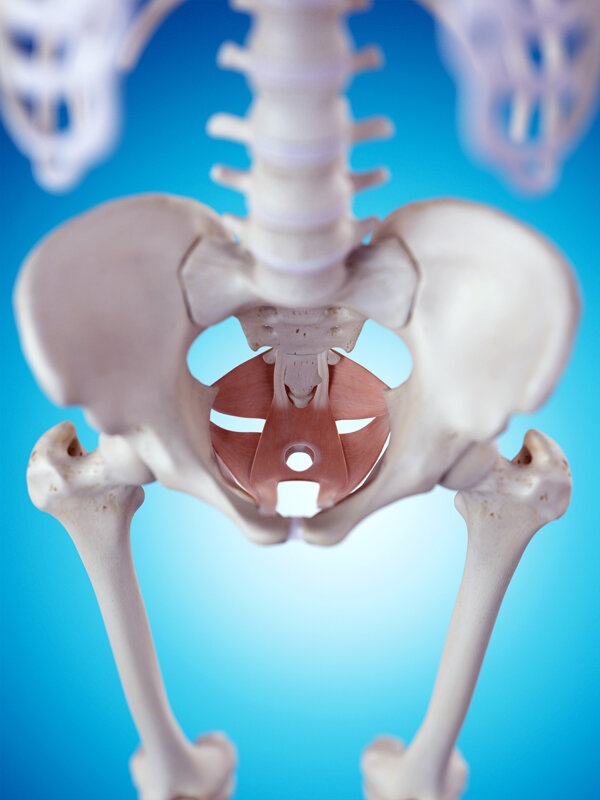
To prevent incontinence, the pressure closing off the urethra (urethral pressure) needs to be higher than the intravesical (bladder) pressure to prevent incontinence. Urethral pressure is provided by the strength of the sphincters, urethral muscle, nerve and blood supply to the muscles and sphincters, pelvic floor muscle and the pelvic floor fascia as well as abdominal pressure.
If the pelvic floor fascia is stretched or pelvic floor muscles are weak the pelvic organs including the bladder hang lower in the pelvis. If this is the case, the urethra (which takes urine from the bladder out of your body) sits too low to get the benefit of the abdominal pressure of a cough etc to close off the urethra to help prevent incontinence. This lowering makes stress incontinence quite likely, even if your pelvic floor is strong.
“ If you have multiple vaginal deliveries, especially if they are big babies and instrumentally delivered, there is an increased chance your pelvic floor fascia and muscles will get stretched or damaged and thus your pelvic contents will hang lower and chances of stress incontinence is higher.”
So in my case, even though my pelvic floor muscles are weak, my fascia is in good condition, likely because I only carried one average sized baby and delivered via caesarean section. If you have multiple vaginal deliveries, especially if they are big babies and instrumentally delivered, there is an increased chance your pelvic floor fascia and muscles will get stretched or damaged and thus your pelvic contents will hang lower and chances of stress incontinence is higher.
Where can I get help?
Go to see a Women’s Health Physiotherapist or Urogynaecologist who can perform different urodynamic tests to assess your urethral position and movement which will help ascertain what line of treatment will help you best. The previous blog Pregnancy, vaginal birth and stress urinary incontinence is a detailed blog on how to determine what is causing your stress incontinence and what treatment would be best for you. It is always best to try pelvic floor strengthening exercises first though.
First step
So if, like me, you struggle to contract your pelvic floor muscles with Kegel exercises and they are weak, try doing some forced exhalations, with pursed lips (like blowing out a candle) to see if it more effective. Pay attention to your pelvic floor muscles to see if they contract. You should feel them lift up into your abdomen, not down. This has certainly become my new practice and another option I recommend to my patients.
Multitasking pelvic floor strengthening whilst mothering
I vividly remember doing some very forced “shhoozing” noises when I had been up for hours trying to get my crying baby to sleep. The “shhoozing” was meant to soothe the baby to sleep but it is also served as a deep breathing exercise to try and prevent me from bursting into tears or screaming! God that first year is hard! Whilst doing more forced than intended “shhoozing” perhaps use your waking nocturnal hours to achieve something tangible like contracting your pelvic floor. Even if you are having no success getting your baby to sleep, at least you know your pelvic floor is getting a work out as you do a forced breath out!
Another opportunity to contract the pelvic floor with a forced exhalation is when you are squatting down to pick up your baby or the umpteenth toy. To prevent a pelvic organ prolapse with a weakened pelvic floor, take care with deep squatting. Bend your knees and hips to 90 degrees only, contract your core and pelvic floor and do a forced exhalation as you go to stand. Squatting too deeply may increase a pelvic organ prolapse if it is vulnerable.
Summary
Voluntary forced expiration such as a voluntary cough, playing the saxaphone or forced breathing out is a good way to contract and strengthen the pelvic floor muscles.
If the urethra is sitting too low in the pelvic cavity due to pelvic fascia or muscle damage pelvic floor muscle strengthening of any kind is unlikely to completely stop incontinence but is a good first line of defense.
References
1. https://www.ncbi.nlm.nih.gov/pmc/articles/PMC4540829/ J Phys Ther Sci. 2015 Jul; 27(7): 2113–2115. The effect of the correlation between the contraction of the pelvic floor muscles and diaphragmatic motion during breathing. Hankyu Park, MSc, PT1 and Dongwook Han, PhD, PT2,*
2. https://www.ncbi.nlm.nih.gov/pmc/articles/PMC6979552/ Cent European J Urol. 2019; 72(4): 378–383 Involuntary cough is superior to voluntary cough for identifying stress urinary incontinence. W. Robert Addington, Robert E. Stephens,2 and Stuart P. Miller1

Melli Tilbrook is the Director and Physiotherapist of Mummyotherapy